PRP
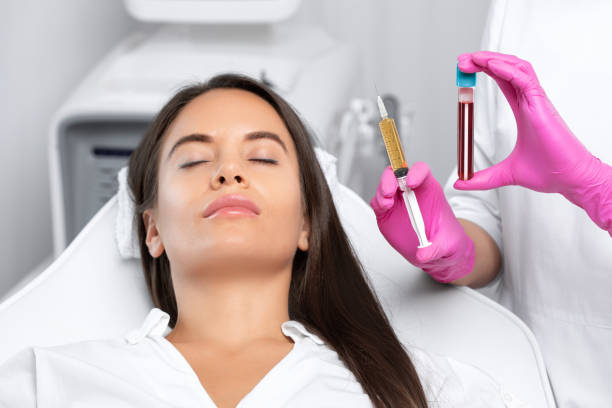
PRP is an autologous treatment: platelet-rich plasma separated from your own blood is returned to the skin or the scalp.
- Duration
- 50 min
- Area
- Face, scalp
- Planning
- 3 sessions, 4 weeks apart
What PRP is
PRP — platelet-rich plasma — is prepared by taking a small volume of your own blood and spinning it in a centrifuge. Centrifugation separates the blood's components by density; the platelet-rich plasma layer is drawn off and returned to the area being treated.
Platelets do more than clot blood. They carry growth factors such as PDGF, TGF-beta and VEGF, which take part in tissue repair and in the formation of new blood vessels. The underlying logic of PRP is to concentrate those natural repair signals where they are wanted.
Where it is considered
- Skin quality and tissue support: face, neck and the backs of the hands
- Scalp: as a supportive treatment in androgenetic hair loss
Where hair loss is the concern, the cause should be investigated before PRP is offered. If there is iron deficiency, thyroid dysfunction or a hormonal cause, treating that comes first.
The appointment and the course
The treatment has three stages — drawing blood, centrifugation, and injection — and takes about an hour in total. A course of several sessions is usually planned three to four weeks apart, with maintenance tailored to the individual afterwards.
The advantage of being autologous, and the known limitation
Because the product comes from your own blood, the risk of foreign material and of allergic reaction is very low. That is PRP's strongest feature.
There is a limitation that deserves to be stated plainly. PRP protocols differ markedly between clinics. Centrifuge speed and duration, the platelet concentration actually obtained, and whether an activation step is used are not standardised. Part of the variability in published results comes from exactly this lack of standardisation. Reducing the outcome to a single figure would therefore be misleading.
When it is not appropriate
Platelet function disorders and certain blood conditions, active infection, uncontrolled systemic disease and active oncological disease are all barriers to treatment. The use of anticoagulants requires separate assessment. PRP is not used during pregnancy or breastfeeding.
FAQ
Whose blood is used in PRP?
Entirely your own. The blood is drawn in clinic during the appointment, centrifuged, and returned to you in the same session, so there is no foreign material involved.
Is PRP enough on its own for hair loss?
Usually not. The underlying cause of the loss needs to be investigated and treated where present; PRP is considered as a supportive part of that plan.
Treatment information is general and does not replace a medical examination. Indications, contraindications, expected response and session planning are discussed during consultation.