Medical Ozone Therapy
Medical ozone is used within complementary medicine, in major or minor protocols planned after a medical history and suitability assessment.
- Duration
- Individual protocol
- Area
- Systemic
- Planning
- Complementary medicine
What medical ozone is
Medical ozone is an oxygen–ozone mixture at defined concentrations, produced from medical-grade oxygen using dedicated equipment. It is used within the scope of complementary medicine.
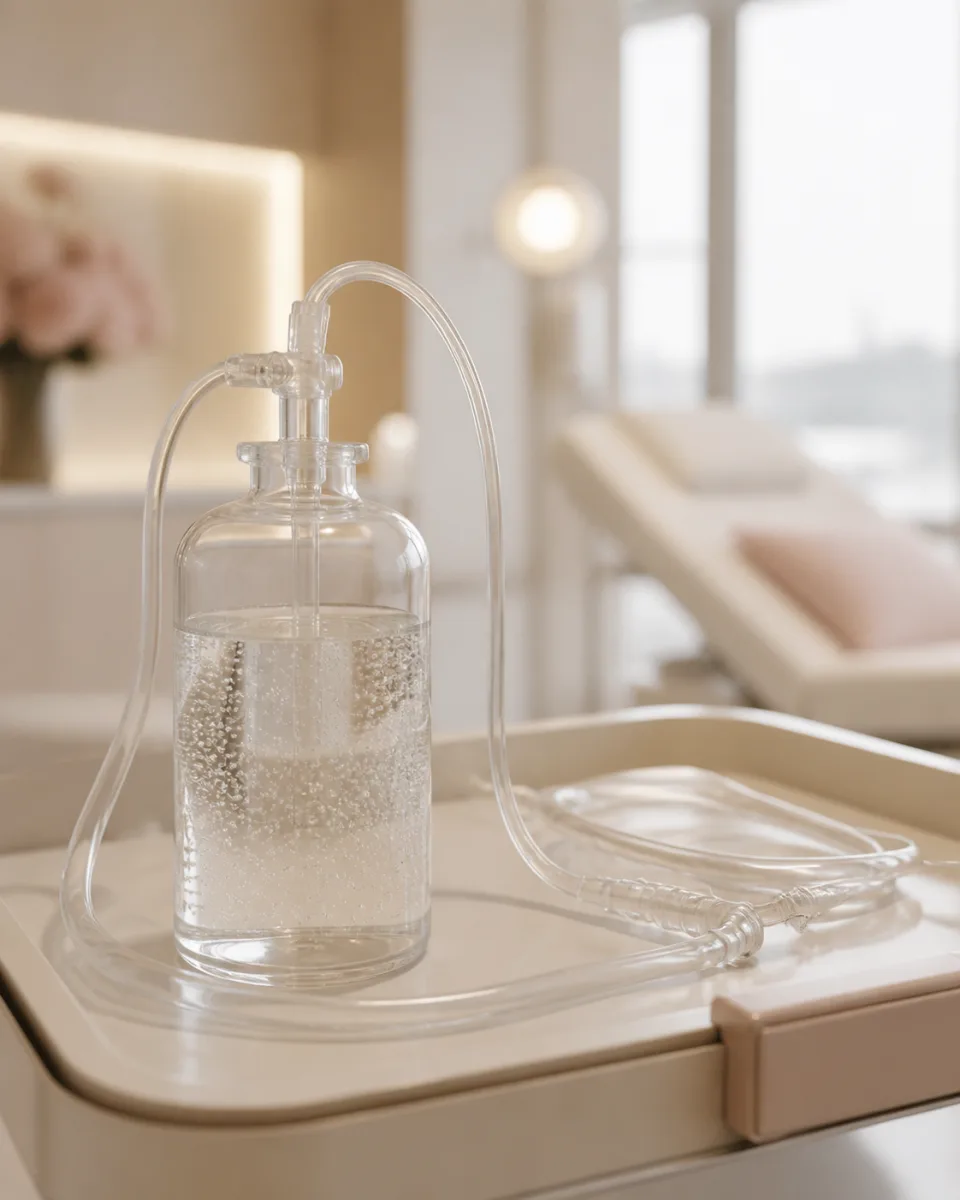
Treatment is generally carried out in one of two forms. In major ozone therapy a quantity of the patient's blood is drawn, treated with the ozone–oxygen mixture, and returned intravenously. Minor applications use smaller volumes and different routes. Which protocol is appropriate is decided individually.
How the expectation should be set
Medical ozone is a complementary approach. It does not replace the treatment of a diagnosed condition, and it does not mean stopping your existing treatment.
The scientific literature on the effectiveness of ozone across different indications is variable, and for some of them the data are limited. We prefer to say that openly. Whether it is appropriate for you is discussed after your medical history and current treatments have been reviewed.
What is needed beforehand
A medical history is taken before treatment, with laboratory assessment where indicated. Sharing all of your medications and supplements matters here.
What a session involves
In the major protocol, intravenous access is established under sterile conditions and a set volume of blood is drawn. That blood is treated with the ozone–oxygen mixture inside a dedicated system and then returned intravenously. The whole process usually takes 30–45 minutes, and you remain under observation throughout.
Most people return to their usual routine afterwards. Some report transient tiredness after the first few sessions. The number of sessions and the interval between them are set according to the goal and the medical assessment; an open-ended ongoing programme is not something we recommend.
When it is not appropriate
One point deserves particular attention: G6PD enzyme deficiency (favism) is a recognised contraindication and is always asked about before treatment.
Alongside that, uncontrolled hyperthyroidism, a recent myocardial infarction, active bleeding or a bleeding disorder, pregnancy, and known hypersensitivity to ozone all rule the treatment out. Uncontrolled systemic illness requires separate assessment.
FAQ
Do I need to stop my current treatment?
No. Medical ozone is complementary and does not replace treatment for a diagnosed condition. Do not change your existing treatment without consulting your doctor.
Are tests needed beforehand?
A medical history is taken and laboratory assessment is requested where indicated. G6PD enzyme deficiency in particular is always asked about.
Treatment information is general and does not replace a medical examination. Indications, contraindications, expected response and session planning are discussed during consultation.