Journal · Clinic Approach
Topical Vitamin C Benefits for Face: What Does Clinical Evidence Say?
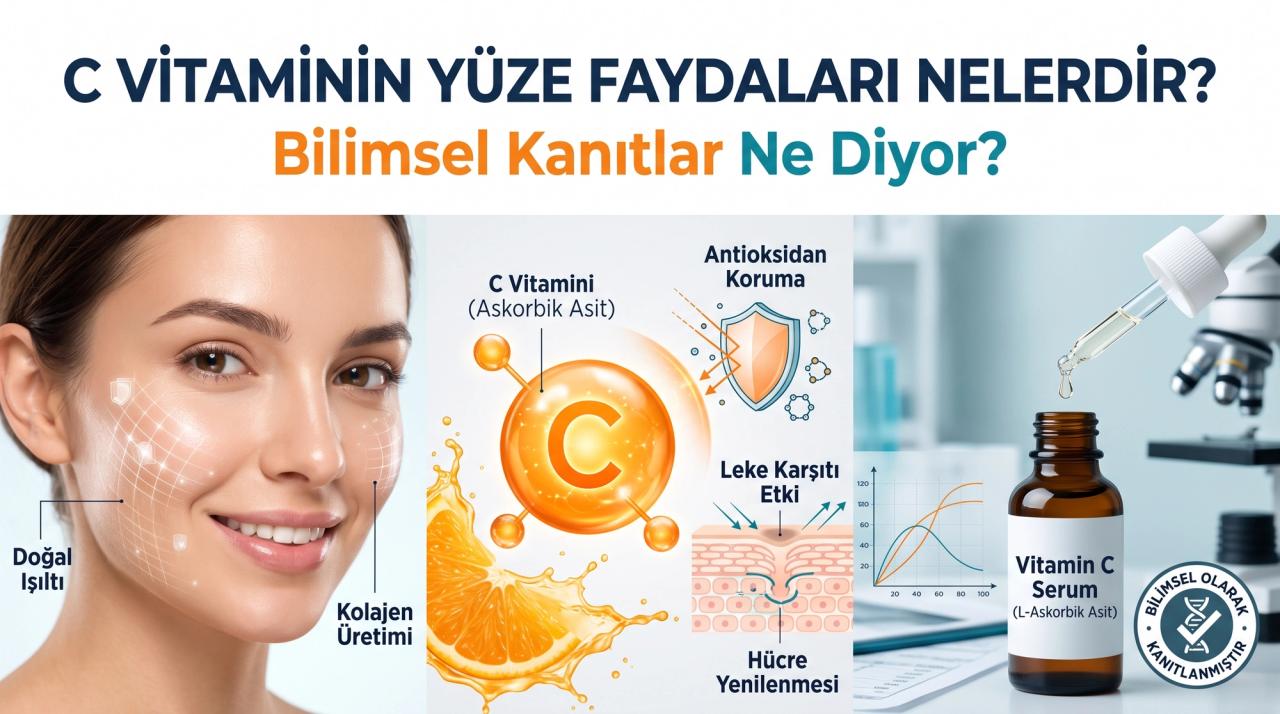
Examining topical vitamin c benefits for face reveals one of the most thoroughly documented interventions in dermatology and cosmetic medicine. The human body is incapable of synthesizing Vitamin C (L-ascorbic acid) endogenously, and oral supplementation delivers only a fraction of its active potential to the cutaneous layers. Topical delivery is therefore required to build cutaneous antioxidant reserves, stimulate collagen synthesis, and neutralize free radical damage directly where environmental exposure takes place.
However, not every over-the-counter bottle delivers its promised biological impact. The clinical outcome of a Vitamin C formulation depends strictly on its molecular form, chemical stability, packaging, and acidic pH balance. Moving past marketing hype, this guide reviews what PubMed-indexed peer-reviewed trials demonstrate regarding how topical Vitamin C functions within facial skin, what it achieves, and where its clinical limitations lie.
How does topical vitamin C work biologically in the skin?
Topical Vitamin C (pure L-ascorbic acid) operates through two primary biological pathways: broad-spectrum antioxidant defense and direct enzymatic stimulation of collagen synthesis. Solar ultraviolet (UV) radiation and airborne particulate pollution generate reactive oxygen species (ROS / free radicals) in skin tissue. These free radicals attack cellular membrane lipids, damage DNA, and accelerate structural degradation. L-ascorbic acid donates electrons to neutralize these reactive species, arresting cellular damage before it becomes irreversible.
Beyond antioxidant scavenging, L-ascorbic acid serves as an indispensable biological cofactor in dermal extracellular matrix remodeling:
- Enzymatic cofactor role: Vitamin C is a mandatory cofactor for prolyl hydroxylase and lysyl hydroxylase, the two key enzymes that stabilize and cross-link the triple-helix structure of collagen molecules.
- Collagen gene upregulation: It directly stimulates mRNA transcription for both Type I and Type III procollagen within dermal fibroblasts.
- Inhibition of matrix breakdown: It downregulates matrix metalloproteinase-1 (MMP-1), the primary enzyme activated by UV exposure that breaks down healthy dermal collagen fibers.
- Histological proof of tissue repair: In a 12-week randomized split-face punch biopsy trial conducted by Fitzpatrick and Rostan, topical Vitamin C generated a significant new collagen band (Grenz zone collagen) and delivered statistically significant clinical improvement in cheek photoaging scores ($P = 0.006$).
How effective is vitamin C against sun damage and pigmentation?
When tackling uneven pigmentation and dullness, Vitamin C directly targets the enzymatic machinery of melanogenesis. It interacts with copper ions situated at the active site of tyrosinase, the rate-limiting enzyme in melanin production. By hindering tyrosinase activity, Vitamin C curbs the creation of new melanin deposits while simultaneously reducing existing dark, oxidized melanin into a lighter chemical form.
- Melasma and pigment trial outcomes: In a split-face, double-blind randomized study by Espinal-Perez and colleagues involving 16 female patients with melasma, 5% L-ascorbic acid cream was compared against 4% hydroquinone over 16 weeks. Objective improvement was noted in 62.5% (10/16) of patients on the Vitamin C side. While hydroquinone yielded 93% improvement, it triggered adverse reactions (stinging, severe erythema) in 68.7% (11/16) of patients, whereas the Vitamin C side recorded side effects in only 6.2% (1/16) of individuals.
- Biological photoprotection shield: Vitamin C does not function as a physical or chemical sunscreen and does not absorb UV radiation. Instead, it serves as a secondary biological barrier against the photons that penetrate sunscreen filters. In a landmark Duke University investigation led by Lin and associates, combining 15% L-ascorbic acid, 1% alpha-tocopherol (Vitamin E), and 0.5% ferulic acid doubled the skin's photoprotection against erythema and cellular apoptosis, elevating defense from 4-fold to 8-fold.
Which form and concentration of vitamin C actually penetrates?
Not every cosmetic formulation can cross the lipid barrier of the outermost skin layer (stratum corneum). Landmark pharmacological studies conducted by Pinnell and co-workers established clear physicochemical parameters governing the percutaneous absorption of L-ascorbic acid:
- Strict acidic pH dependency: To cross the lipophilic stratum corneum, L-ascorbic acid must remain uncharged (non-ionized). This requires a formulation pH lower than its pKa (4.2), ideally maintained between pH 3.2 and 3.5. At a pH exceeding 4.0, the molecule ionizes and cannot penetrate the stratum corneum effectively.
- Concentration saturation threshold (10% to 20%): Percutaneous absorption increases linearly with concentration up to 20%, where tissue saturation is reached. Formulations exceeding 20% do not yield higher cutaneous concentrations; they merely increase the risk of stinging, irritation, and allergic contact dermatitis. For first-time users or sensitive skin types, concentrations between 10% and 15% provide optimal clinical efficacy.
- Derivatives vs pure L-ascorbic acid: Derivatives such as magnesium ascorbyl phosphate (MAP), sodium ascorbyl phosphate (SAP), and 3-O-ethyl ascorbic acid offer greater shelf stability, but they require enzymatic cleavage by cutaneous enzymes to convert into biologically active L-ascorbic acid. Research shows that this enzymatic conversion rate varies widely across individuals and does not achieve the tissue bioavailability of pure L-ascorbic acid.
What are topical vitamin c benefits for face unable to fix?
While topically applied Vitamin C delivers proven antioxidant defense and supports dermal health, no topical cosmeceutical can substitute for in-clinic aesthetic procedures. Clear expectations set in clinical practice include the following limitations:
- Deep dynamic expression wrinkles: Dynamic lines caused by repetitive muscle movement across the forehead, glabella, or lateral canthal areas cannot be erased with topical serums. Relieving these mechanical creases requires targeted neuromodulators such as Botox.
- Structural volume loss and sagging: Midface volume deflation, sunken cheeks, or jowling stem from the atrophy of deep fat pads and bone resorption. Restoring these structural contours requires injectable biostimulators like Radiesse or hyaluronic acid midface fillers.
- Broken capillaries and vascular rosacea: While Vitamin C can calm minor diffuse inflammation, it cannot obliterate permanently dilated telangiectasias; vascular lesions require dedicated vascular laser therapies.
- Sunscreen replacement: Vitamin C must never be relied upon as a primary UV shield. It functions exclusively as an adjunctive antioxidant beneath a broad-spectrum mineral or chemical sunscreen.
- Regulatory status: Products containing topical Vitamin C are classified and regulated by the US FDA, European EMA, and international agencies as cosmetics or cosmeceuticals, not as prescription pharmaceuticals approved for reversing skin aging.
How and when should vitamin C serum be used in a daily routine?
Maximizing biological availability requires adherence to correct application sequencing and formula preservation:
- Morning application: Apply 4 to 5 drops of Vitamin C serum in the morning to thoroughly cleansed, dry skin. Allow it to absorb for two minutes, followed by a moisturizer and a broad-spectrum high-SPF sunscreen. This protocol establishes an active antioxidant barrier against daily UV rays and environmental pollutants.
- Monitoring serum oxidation: Pure L-ascorbic acid is susceptible to oxidation upon repeated exposure to atmospheric oxygen, heat, and ambient light, turning into dehydroascorbic acid. If your serum turns from a clear or pale champagne tint into amber, dark orange, or brown, it has oxidized. Applying oxidized Vitamin C can trigger follicular plugging, blackhead-like staining, and skin barrier inflammation.
- Ingredient compatibility: Layering high-strength L-ascorbic acid directly over potent chemical exfoliants (such as high-percentage glycolic or salicylic acid) or strong retinoids can provoke barrier compromise and dermatitis. Use Vitamin C in the morning and reserve prescription or cosmetic retinoids for evening application.
Frequently Asked Questions (FAQ)
Should topical Vitamin C serum be applied in the morning or at night?
For maximum photoprotective and antioxidant benefit, Vitamin C serum is best applied in the morning immediately before applying sunscreen. This morning placement neutralizes free radicals generated by daytime UV radiation and environmental pollution. While evening application can support overnight cellular repair, morning application offers superior biological defense against active oxidative stressors.
Does Vitamin C serum cause facial hair growth or acne breakouts?
Topical Vitamin C does not stimulate hair follicles or produce facial hair growth. However, if a formulation contains comedogenic carrier oils or silicones, or if the acidic pH irritates the follicular infundibulum, acne-prone patients may experience minor breakouts. Furthermore, oxidized serum that turns dark orange can deposit in open pores, causing temporary dark spots that mimic blackheads.
Can Vitamin C serum be combined with niacinamide or hyaluronic acid?
Hyaluronic acid pairs seamlessly with Vitamin C, providing immediate surface hydration while the antioxidant absorbs into deeper cutaneous layers. Contrary to outdated formulations myths, modern stable formulations allow Vitamin C and niacinamide to be safely layered or combined at ambient skin temperatures without causing flushing, provided the skin tolerates both active ingredients comfortably.
Can patients with sensitive skin or rosacea use topical Vitamin C?
Pure L-ascorbic acid serums formulated at an acidic pH below 3.5 can induce burning, stinging, and persistent redness in individuals with compromised epidermal barriers or active rosacea. For sensitive complexions, dermatologists recommend lower concentrations (5% to 10%) or lipid-soluble derivatives such as sodium ascorbyl phosphate or tetrahexyldecyl ascorbate under medical guidance.
How can you tell if your Vitamin C serum has gone bad?
Fresh, unadulterated L-ascorbic acid solution is transparent or very faintly pale champagne in color. As it oxidizes through air and light exposure, it progresses from light yellow to amber, deep orange, and eventually dark brown. Once the solution exhibits an orange or brownish hue, it has lost its antioxidant capacity and should be discarded to prevent free radical skin irritation.
Consultation and Clinical Assessment
Uneven pigmentation, solar lentigines, and loss of skin elasticity vary considerably based on individual skin thickness, underlying vascularity, and genetic background. While evidence-based topical cosmeceuticals form the cornerstone of daily home maintenance, reversing deeper pigmentary disorders and structural dermal changes requires personalized clinical protocols. To evaluate your skin's biological needs and explore customized in-clinic therapies, you can arrange a consultation with Dr. Canan Demir clinic.
Medical Disclaimer
This article is prepared for general information only and educational purposes. None of the material presented constitutes individual medical diagnosis, treatment recommendations, or clinical guarantees. Always consult a qualified medical physician or dermatologist before initiating active skincare ingredients or clinical aesthetic treatments.
References
- Pinnell SR, Yang H, Omar M, et al. Topical L-ascorbic acid: percutaneous absorption studies. Dermatol Surg. 2001;27(2):137-142. DOI: 10.1046/j.1524-4725.2001.00264.x
- Lin FH, Lin JY, Gupta RD, et al. Ferulic acid stabilizes a solution of vitamins C and E and doubles its photoprotection of skin. J Invest Dermatol. 2005;125(4):826-832. DOI: 10.1111/j.0022-202X.2005.23768.x
- Fitzpatrick RE, Rostan EF. Double-blind, half-face study comparing topical vitamin C and vehicle for rejuvenation of photodamage. Dermatol Surg. 2002;28(3):231-236. DOI: 10.1046/j.1524-4725.2002.01129.x
- Humbert PG, Haftek M, Creidi P, et al. Topical ascorbic acid on photoaged skin. Clinical, topographical and ultrastructural evaluation: double-blind study vs. placebo. Exp Dermatol. 2003;12(3):237-244. DOI: 10.1034/j.1600-0625.2003.00008.x
- Espinal-Perez LE, Moncada B, Castanedo-Cazares JP. A double-blind randomized trial of 5% ascorbic acid vs. 4% hydroquinone in melasma. Int J Dermatol. 2004;43(8):604-607. DOI: 10.1111/j.1365-4632.2004.02134.x