Journal · Treatments
Botox: When It Works and When It Doesn't
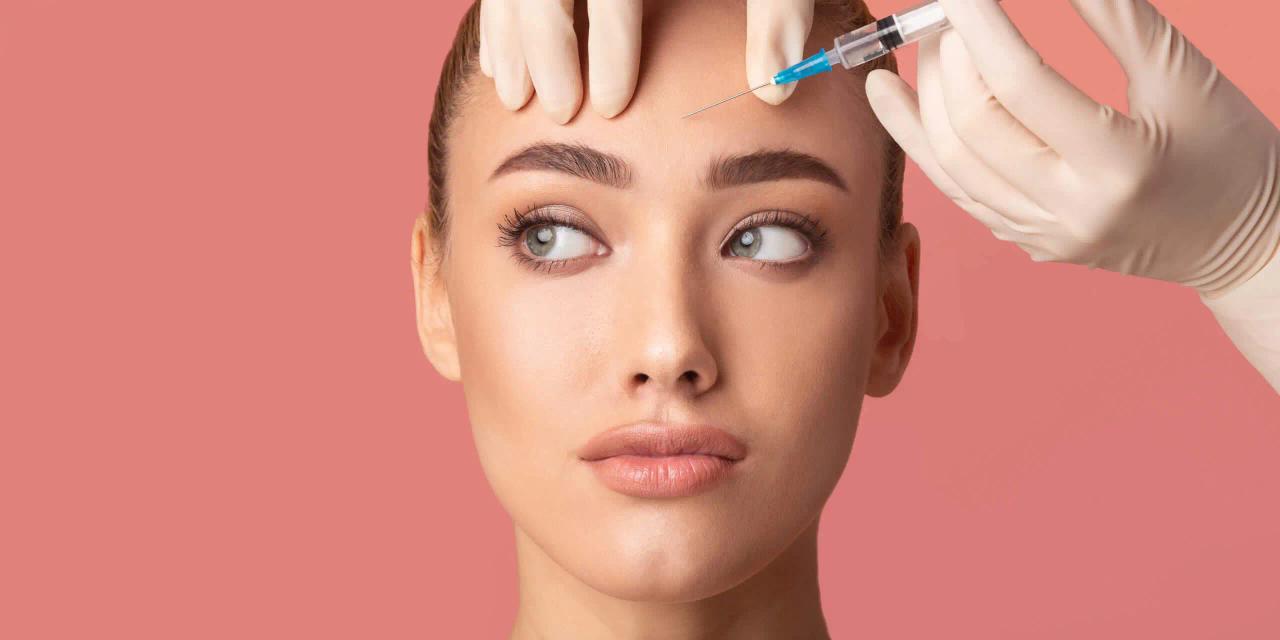
Botox is one of the most widely performed aesthetic procedures in the world — in the United States alone, more than 7 million procedures were performed in 2016. Yet some patients walk away disappointed: not because the treatment failed, but because it was never the right tool for the lines they wanted gone.
This guide explains how botulinum toxin actually works, where the evidence for it is strongest, and where a different treatment is the honest answer.
What Botox is and how it works
Botox is derived from botulinum toxin, an exotoxin produced by the bacterium Clostridium botulinum. At the nerve ending that supplies a muscle, it blocks the release of acetylcholine — the neurotransmitter that carries the contraction signal. Without that signal the muscle relaxes, and the skin above it stops creasing.
At the molecular level this happens in four steps: the toxin's heavy chain binds receptors on the presynaptic membrane, the complex is taken into the cell, it moves into the cytosol, and the light chain — a zinc-dependent protease — cleaves the SNARE proteins (SNAP-25, synaptobrevin, syntaxin) that vesicles need in order to fuse and release their contents.
The bacterium produces eight toxins (A, B, C1, C2, D, E, F and G). Medicine uses mainly types A and B. Commercially available preparations include onabotulinumtoxinA (Botox), abobotulinumtoxinA (Dysport), incobotulinumtoxinA (Xeomin), prabotulinumtoxinA (Jeuveau) and rimabotulinumtoxinB (Myobloc). Their units are not interchangeable — different preparations require different doses to produce a comparable effect.
A short history
Botulinum toxin was first identified in 1897. Pure type A was isolated in crystalline form in 1946. In 1978 Dr Scott administered it to a human patient for the first time, to treat the eye muscles after surgery for retinal detachment; the success of that case opened the door to treating strabismus, and the work earned him the title "Father of Botox." The landmark 1980 paper established the safety and efficacy of BTX-A in human disease, and use later spread from ophthalmology into dermatology.
The US FDA approved it as a cosmetic treatment for glabellar frown lines in 2002. A second onabotulinumtoxinA formulation, developed in France, received European Union authorisation for aesthetic use in 2006 and FDA approval in 2009.
Where the evidence for Botox is strongest
1. Dynamic (expression) wrinkles. Botox acts on lines produced by muscle movement. The areas most often requested in the source review are:
- Vertical lines between the brows (glabellar lines)
- Lines around the eyes (crow's feet)
- Horizontal forehead lines
- Lines at the corners of the lips
- "Cobblestone" dimpling of the chin
One caveat worth knowing: as the review notes, US FDA cosmetic approval covers principally the forehead and the periocular area. Injections elsewhere are considered off-label and should be assessed by an experienced physician.
2. Chronic migraine. Multicentre, double-blind, placebo-controlled studies have shown Botox to be an effective preventive treatment. Patients in the Botox arm had significant reductions in headache days, migraine days, total hours of headache and recurrence of moderate-to-severe headache days. A meta-analysis, however, confirmed the benefit only for chronic daily headache and chronic migraine (more than 15 episodes per month). Treatment is generally repeated every three months.
3. Excessive sweating (hyperhidrosis). Profuse underarm sweating is a well-recognised use; the toxin blocks cholinergic signalling to sweat glands as well as to muscle.
4. Cervical dystonia. Cochrane systematic reviews of high-quality randomised trials support Botox for cervical dystonia. Where effective, an injection can safely be repeated, and studies indicate it also helps prevent secondary degenerative changes of the cervical spine.
5. Blepharospasm. Botox has been the treatment of choice for involuntary eyelid contraction since 1985. The authors of a Cochrane review concluded that, given the clear benefit, running further placebo-controlled trials would be unethical. Botox is also used in the management of hemifacial spasm.
6. Spasmodic dysphonia (laryngeal dystonia). In adductor laryngeal dystonia, a meta-analysis of 30 randomised controlled trials found improvement of roughly one standard deviation across every voice-related quality-of-life measure assessed. A prospective study of 133 patients recorded a 9.6% improvement in mean Voice Handicap Index.
7. Overactive bladder and spasticity. Botox is used to reduce urinary incontinence caused by an overactive bladder, and in the management of spasticity.
8. Under investigation. Forehead injections have been reported to reduce depression: four randomised trials confirmed an antidepressive effect, while a fifth failed to show significant benefit. The mechanism is unknown and this is not standard care.
Where Botox does not work
Setting the right expectation is half the result. In clinical practice, Botox alone is not the answer for:
- Static wrinkles — lines visible when the face is completely at rest, caused by sun damage and collagen loss rather than muscle pull.
- Marked skin laxity and volume loss — advanced sagging and lost volume call for a different approach.
- Skin-surface concerns — pigmentation, pores and texture.
- Infrequent migraine — no proven benefit below 15 episodes a month.
- A permanent result — the effect is temporary by design.
Fillers, energy-based devices or a skincare protocol may be the better fit for several of these. Only an in-person assessment can tell you which.
How long it lasts
The muscle weakness produced by an injection typically lasts about three months. Depending on the type of therapy, effects persist between three and twelve months. For aesthetic maintenance, the source review reports that patients typically need two to six sessions per year.
An important caution: with repeated injections a minority of patients develop neutralising antibodies and stop responding. The accepted way to reduce that risk is to use preparations with the lowest possible antigenicity, keep the dose per session as low as possible, and leave as long as possible between sessions — at least 2.5 months. Topping up the moment the effect fades works against you.
Side effects and who should avoid it
Botox injections are generally well tolerated and adverse effects are uncommon. Those that do occur include pain, swelling or bruising at the injection site (usually resolving within days), reduced strength of eye closure, ectropion, dry eye (xerophthalmia), headache and influenza-like symptoms.
The hallmarks of a poorly performed treatment — a frozen, expressionless face, asymmetry, or drooping — generally follow too much toxin or injection into the wrong area. Higher doses have been shown to migrate along nerve cells beyond the injection site, and the FDA carries a warning about distant spread. This is precisely why dose and anatomical knowledge matter.
According to the source review, Botox is contraindicated — or requires individual assessment before treatment — in: pregnancy and breastfeeding, neurological disorders (including amyotrophic lateral sclerosis and myopathies), known allergy to botulinum toxin injections, diabetes, psoriasis, patients taking anti-HIV medication, body dysmorphic disorder, and a tendency to keloid scarring.
Drug interactions to disclose: aminoglycoside antibiotics (e.g. gentamicin) and polymyxins, quinidine, Alzheimer's medications (galantamine, rivastigmine, tacrine), anticoagulants such as warfarin, and ambenonium and pyridostigmine (used in myasthenia gravis). Tell your doctor about every medication you take.
What actually determines your result
The central point the source review makes is this: unwanted effects are reduced by knowing the anatomical landmarks, assessing muscle function, recognising baseline asymmetries, allowing for possible toxin migration, and taking site-specific precautions.
General aftercare: avoid direct sun, extremes of heat and cold, tobacco and alcohol, excessive muscle strain, and rubbing the injection site.
Frequently asked questions
Is Botox dangerous? Botulinum toxins used in medicine are considered safe when handled properly — pure doses, administered by certified healthcare professionals under strict medical guidelines. Risk comes from incorrect dose and technique.
Why does the doctor start with a low dose? Keeping the dose per session as low as possible is the accepted way to reduce the risk of neutralising antibodies. The dose can be adjusted at the next session based on your response.
What determines the price? The US figures cited in the source review put the cost at $100–$400 to treat a single region. Price varies with the number of areas, the product used and the country. Contact the clinic for current pricing.
Is Botox permanent? No. The effect is temporary and sessions must be repeated.
Book a consultation
Whether Botox is right for you depends on your facial muscle pattern and the type of lines you have — something only an examination can establish. At Dr. Canan Demir's clinic, every patient has their expression muscles assessed before treatment, and the target areas and lowest effective dose are planned together with you.
Get in touch with Dr. Canan Demir's clinic for a personalised assessment, pricing and appointments. We are glad to answer your questions.
This content is for information only and does not replace medical advice. Treatment decisions are made after an in-person consultation.
Source: Mukherjee J, Naresh V, Sri Krishna A, Boggula N, Rama Rao T. Botox Treatment: A Comprehensive Review. Asian Journal of Medicine and Health. 2023;21(11):349-358. DOI: 10.9734/AJMAH/2023/v21i11954