Journal · Clinic Approach
Skin Barrier Repair in Winter: Skin Boosters and Polynucleotides
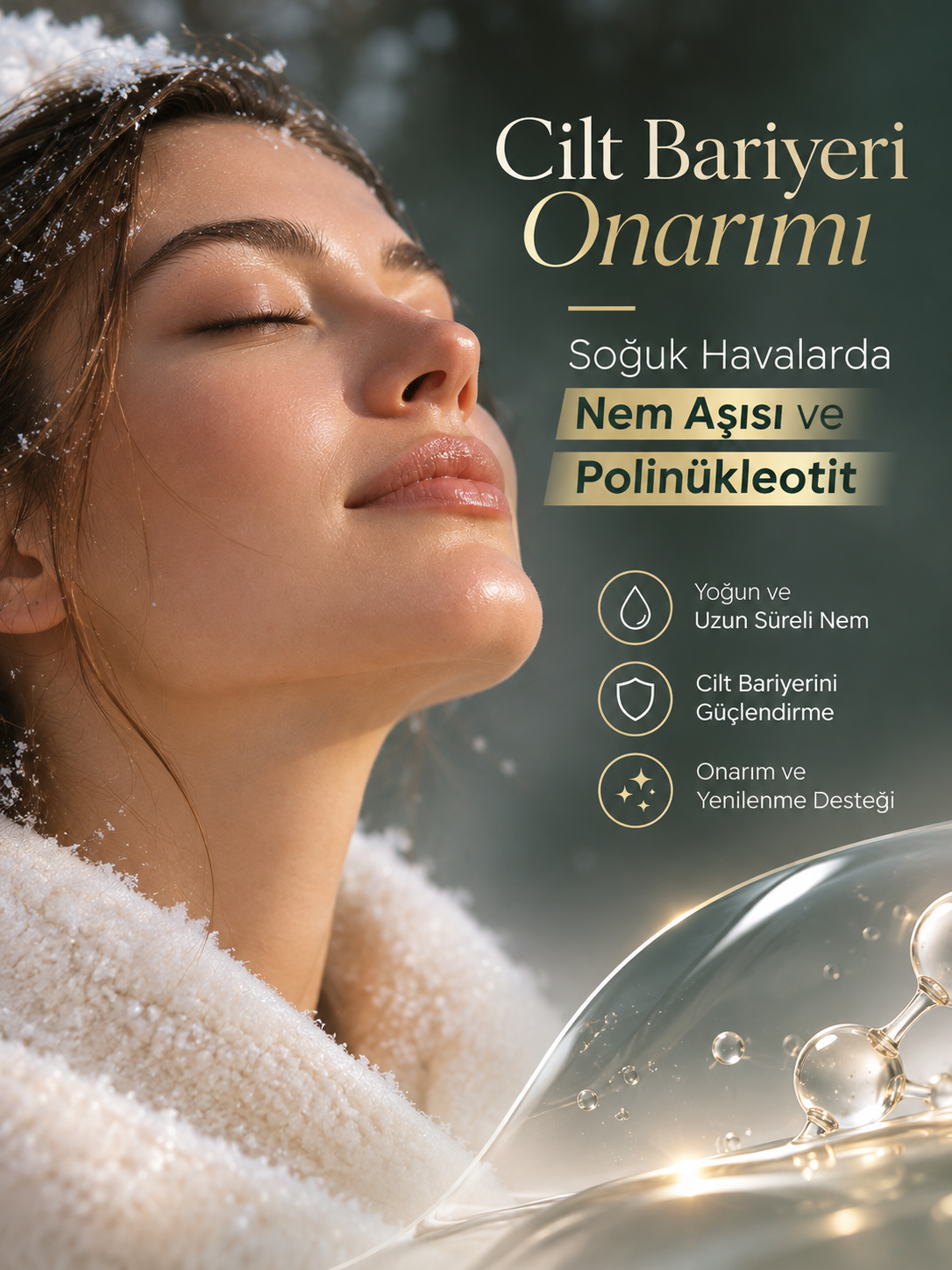
As autumn draws to a close, plunging ambient temperatures, brisk winds, and indoor artificial heating systems subject human skin to severe environmental stress. During this seasonal transition, many patients report acute facial tightness, flaking, dullness, stinging sensations, and persistent dryness that fails to resolve even with the application of thick emollient creams. These symptoms are not merely cosmetic superficial dehydration; they represent a clinical distress signal indicating breakdown of the cutaneous lipid barrier.
In evidence-based aesthetic dermatology, achieving genuine skin barrier repair winter necessitates far more than applying topical moisturizers; it requires restoring dermal hydration at a cellular depth and biologically repairing damaged intercellular architecture. When transepidermal water loss (TEWL) accelerates unchecked, skin becomes vulnerable to micro-fissures, neurogenic erythema, and accelerated photo-aging. In this clinical guide, we explore the physiological impact of winter climate on dermal integrity, pure hyaluronic acid skin boosters, and regenerative polynucleotide (salmon DNA) therapies.
How cold weather compromises the cutaneous barrier: Transepidermal water loss (TEWL)
The stratum corneum operates under the classic "brick and mortar" biological paradigm; corneocyte cells constitute the bricks, while ceramides, cholesterol, and free fatty acids form the lipid mortar:
- Environmental aridity and lipid matrix depletion: Low outdoor relative humidity combined with desiccating indoor heating acts as a biological sponge, drawing moisture out of viable epidermal layers; this process is clinically classified as transepidermal water loss (TEWL).
- Cold-induced hyposecretion of cutaneous sebum: Sub-zero temperatures trigger peripheral vasoconstriction and significantly down-regulate sebaceous gland activity; the depleted acid mantle leaves the epidermis defenseless against environmental irritants.
- Limitations of topical cosmetic creams: Standard cosmetic moisturizers possess large molecular weights that remain confined to the superficial stratum corneum; they cannot replenish depleted water stores within the reticular dermis.
Hyaluronic Acid Skin Boosters: Replenishing dermal water reservoirs
The foundational clinical strategy for reversing winter xerosis involves replenishing lost moisture directly via micro-intradermal delivery:
- 1000-fold water-binding capacity: High-purity uncrosslinked or lightly stabilized hyaluronic acid molecules bind approximately 1000 times their molecular weight in water molecules.
- Dermal elasticity and hydro-balance enhancement: In a randomized clinical trial published by Kerscher and colleagues in Dermatol Surg (DOI: 10.1111/j.1524-4725.2008.34247.x), intradermal hyaluronic acid micro-aliquots demonstrated statistically significant increases in deep dermal hydration and skin elasticity lasting up to 6 months.
- The glass-skin radiance phenomenon: Strategically deposited micro-droplets attract tissue water within 48 hours, smoothing superficial dehydration lines and imparting an intrinsic, luminous dermal glow.
Polynucleotide (Salmon DNA) Therapy: Cellular repair and tissue regeneration
When cutaneous inflammation is pronounced and physical barrier damage is severe, polynucleotide biopolymers provide advanced biological repair:
- Purified biopolymers derived from salmon DNA: Highly purified polynucleotide chains (PN / PDRN) exhibit exceptional biocompatibility with human tissue, activating cellular regeneration.
- A2A adenosine receptor activation: As demonstrated by Squadrito and colleagues in Pharmacol Res (DOI: 10.1016/j.phrs.2017.01.023), PDRN binds to cell-surface A2A adenosine receptors, suppressing chronic cutaneous inflammation while stimulating micro-angiogenesis.
- Fibroblast activation and dermal thickening: Polynucleotides support endogenous cellular salvage pathways, stimulating dermal fibroblasts to secrete native extracellular matrix and sealing winter micro-fissures from within.
Limitations of skin revitalization: Objective clinical boundaries
Medical transparency ensures patients understand precisely what injectable hydration treatments can and cannot achieve:
- Cannot duplicate volumetric structural fillers: Skin boosters and salmon DNA do not augment cheekbones, project the chin, or lift fallen facial fat compartments; their primary clinical purpose is tissue revitalization, hydration, and elasticity.
- Does not replace home barrier care regimens: Although intradermal injections saturate the deep dermis, patients must continue utilizing ceramide-rich barrier creams and broad-spectrum sunscreen to seal the epidermal surface against ongoing water evaporation.
- Sterility and regulated medical certifications are mandatory: Administering unauthorized mesotherapy cocktails in non-clinical settings carries risks of mycobacterial infection and foreign-body granulomas; all products must hold clearance from health regulatory authorities and European CE medical marks.
Frequently Asked Questions (FAQ)
What is the difference between a skin booster and a traditional dermal filler?
Traditional hyaluronic acid dermal fillers are extensively crosslinked and injected deeply to restore structural facial volume (cheeks, lips, jawline). Skin boosters feature uncrosslinked or lightly stabilized hyaluronic acid; they do not volumize but are distributed across the dermis to enhance hydration and luminosity.
How many sessions of Polynucleotide (Salmon DNA) therapy are required?
To achieve complete barrier rehabilitation and cellular neocollagenesis, the recommended protocol involves 3 to 4 sessions spaced 2 to 3 weeks apart. Results typically persist for 9 to 12 months.
Will there be visible bumps or bruising after the procedure?
Mild micro-papules resembling tiny mosquito bites appear at injection sites immediately after treatment; these papules typically diffuse and integrate completely into the surrounding dermis within 12 to 24 hours as the product hydrates.
What precautions should be taken after receiving winter skin boosters?
Avoid hot saunas, strenuous exercise, and cosmetic makeup for the first 24 hours. Maintain generous internal water intake and apply soothing barrier formulations containing ceramides as directed by your physician.
Can skin boosters be administered to patients with eczema or rosacea?
Yes; polynucleotides (salmon DNA) in particular are highly beneficial for reactive skin types due to their potent anti-inflammatory properties, which calm erythema and reinforce delicate vascular walls.
Consultation and Clinical Assessment
Protecting your skin from winter cracking, flaking, and cellular dehydration begins with a tailored clinical regimen. Selecting the appropriate biomimetic hydration protocol ensures resilient, glowing skin throughout the colder months. To establish your customized skin barrier rehabilitation plan, contact Dr. Canan Demir clinic to schedule your comprehensive consultation.
Medical Disclaimer
The dermatological information and treatment descriptions provided in this article are intended solely for general educational and information only purposes. They do not constitute formal medical diagnosis, individualized prescriptions, or clinical guarantees. Always consult a qualified medical physician for diagnostic skin analysis before undergoing injectable aesthetic treatments.
References
1. Kerscher M, Bayrhammer J, Reuther T. Rejuvenating influence of a stabilized hyaluronic acid-based gel of nonanimal origin on facial skin aging: a randomized, rater-blinded, comparative study. Dermatol Surg. 2008;34(5):720-726. DOI: 10.1111/j.1524-4725.2008.34247.x.
2. Squadrito F, Bitto A, Altavilla D, et al. The effect of polydeoxyribonucleotide (PDRN) on wound healing, angiogenesis, and inflammation. Pharmacol Res. 2017;126:1-9. DOI: 10.1016/j.phrs.2017.01.023.
3. Guida S, Farnetani F, Nisticò SP, et al. New trends in skin rejuvenation: hyaluronic acid and polynucleotides. Clin Cosmet Investig Dermatol. 2021;14:175-181. DOI: 10.2147/CCID.S289056.
4. Ganceviciene R, Liakou AI, Theodoridis A, Makrantonaki E, Zouboulis CC. Skin anti-aging strategies. Dermatoendocrinol. 2012;4(3):308-319. DOI: 10.4161/derm.22804.
5. Colangelo MT, Govoni P, Belletti S, Squadrito F, Guizzardi S. Polydeoxyribonucleotide promotes proliferation and migration of human gingival fibroblasts. J Periodontal Res. 2021;56(3):553-561. DOI: 10.1111/jre.12856.