Journal · Treatments
Non-Surgical Facelift: A Clinical Guide to HIFU and Morpheus8 RF
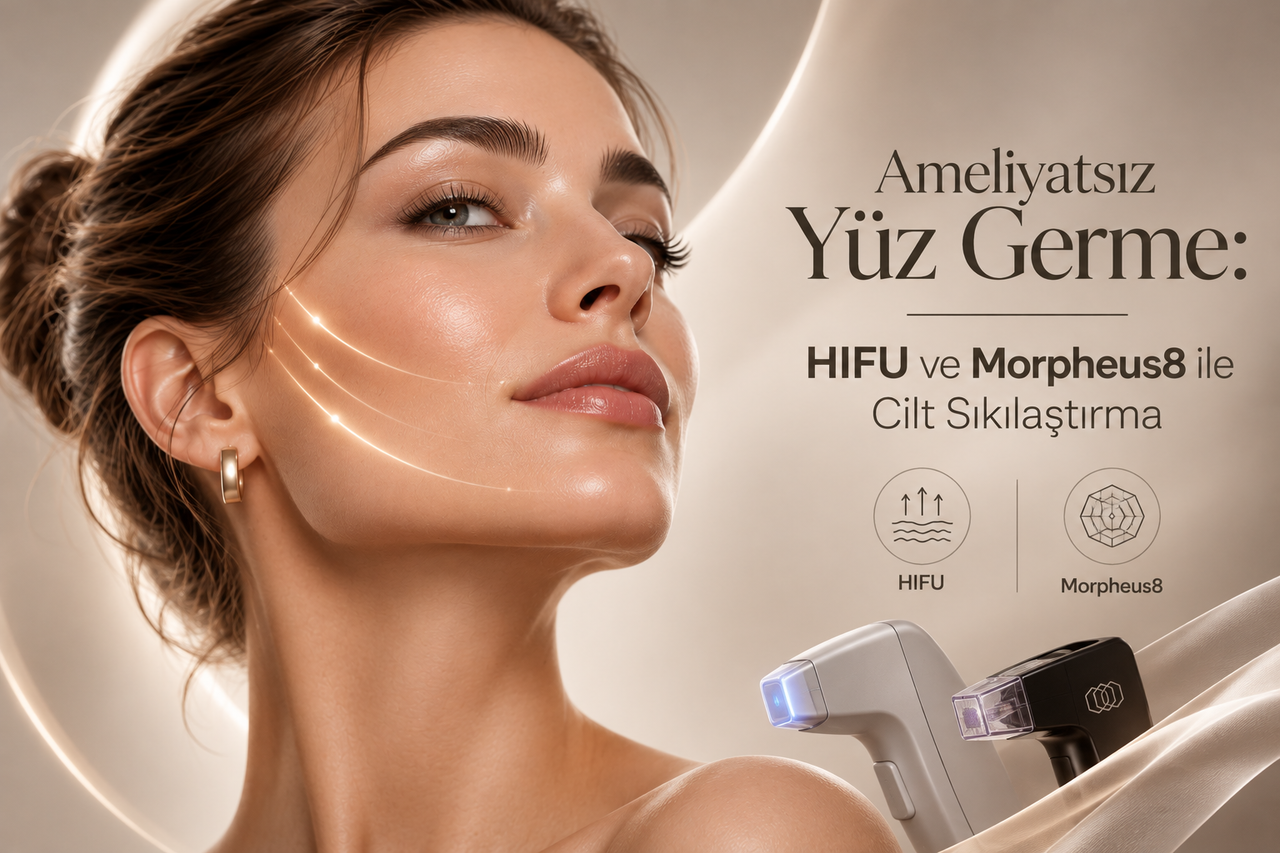
With advancing age and the cumulative burden of gravity, structural collagen and elastin fibers within the deeper cutaneous layers steadily deteriorate. This biological process manifests as blunting of the mandibular border (jawline), caudal descent of midface soft tissues, and progressive skin laxity across the anterior cervical region. Historically, correcting these anatomical deformities necessitated open surgical rhytidectomy, requiring general anesthesia, permanent incisions, invasive dissection, and several weeks of ecchymosis and recovery. Today, sophisticated energy-based medical devices enable clinicians to reach surgical anatomical depths without a single scalp incision.
In contemporary aesthetic practice, the non-surgical facelift paradigm has established itself as the clinical gold standard for patients seeking structural restoration without surgical downtime. In this detailed clinical review, grounded in peer-reviewed aesthetic literature and clinical experience, we explore the cellular mechanisms of HIFU (high-intensity focused ultrasound) and Morpheus8 (fractional radiofrequency microneedling), their induction of neocollagenesis, and their objective clinical parameters.
Why have energy-based non-surgical lifting technologies surged in popularity?
An analysis of search patterns and patient preferences demonstrates that the global transition toward non-surgical modalities is rooted in three distinct clinical advantages tailored to modern life:
- Zero-downtime procedural convenience: While traditional surgical rhytidectomy requires patients to withdraw from professional and social commitments for several weeks, energy-based systems allow patients to resume work immediately or by the following morning.
- Natural vector lifting and biological neocollagenesis: Rather than forcibly tensioning cutaneous flaps to generate an unnatural aesthetic, energy devices trigger endogenous fibroblast remodeling; in a prospective cohort study published by Alam and colleagues in JAAD (DOI: 10.1016/j.jaad.2009.06.039), micro-focused ultrasound proved highly effective for lifting submental and neck laxity via sustained biological repair.
- Restoration of tissue laxity following rapid weight reduction: For patients undergoing rapid metabolic weight loss through medical regimens or bariatric interventions, non-surgical tightening provides an essential tool to manage acute midfacial deflation and cervical sagging without surgical excision.
How do HIFU and Radiofrequency Microneedling (Morpheus8) function biologically?
Both therapeutic platforms utilize focused thermal energy to induce controlled micro-coagulation; however, their modes of physical energy delivery and targeted tissue depths complement each other with anatomical precision:
- HIFU and deep SMAS layer coagulation: Acoustic ultrasound waves bypass the epidermis entirely to reach the SMAS (superficial musculoaponeurotic system) at depths of 3.0 mm and 4.5 mm; by generating focal micro-thermal zones at 65 to 70°C, the acoustic energy induces instantaneous triple-helix collagen contraction followed by long-term structural remodeling.
- Morpheus8 and subdermal adipose remodeling: Insulated gold-coated micro-pins penetrate the skin from 1 mm to 4 mm, discharging bipolar radiofrequency current directly from the exposed tips; as documented by Dayan and colleagues in Aesthet Surg J (DOI: 10.1093/asj/sjz055), fractional RF thickens dermal architecture while achieving profound subdermal adipose remodeling to tighten lower facial contours.
- Three-dimensional synergistic clinical protocols: While HIFU lifts the foundational architectural frame (SMAS), Morpheus8 tightens superficial dermal laxity, refines enlarged pores, and smooths texture; combining both modalities delivers a comprehensive 3D tissue restoration that addresses both depth and surface quality.
Which anatomical regions and clinical candidates achieve the best outcomes?
Energy-based lifting technologies deliver predictable, high-satisfaction outcomes for patients presenting with mild to moderate cutaneous laxity who desire defined contours without artificial volume:
- Mandibular margin (Jawline) sharpening and submental contraction: By consolidating lax submental soft tissues and pre-jowl fullness, these devices recreate a crisp transition between the lower face and the neck.
- Anterior neck laxity and horizontal platysmal rings: Cervical skin is thin and vulnerable to accelerated photodamage; RF microneedling represents the premier non-surgical option for tightening crepey neck skin and softening stubborn horizontal neck lines.
- Enlarged follicular pores, acne scarring, and surface rhytids: The mechanical micro-punctures combined with thermal coagulation stimulate robust dermal re-epithelialization, promoting the gradual elevation and effacement of atrophic acne scars.
What are the biological limitations and boundaries of energy-based devices?
Medical transparency regarding procedural limitations is essential for ensuring realistic patient expectations. In our clinic, we emphasize the following biological boundaries:
- Cannot excise excessive redundant skin folds: In patients over 65 years with advanced elastosis and significant cutaneous draping, energy platforms cannot duplicate the tissue resection achieved by surgical excision; these candidates remain primary candidates for traditional surgery.
- Therapeutic results do not manifest overnight: Although immediate micro-contraction occurs due to thermal collagen denaturing, true neocollagenesis and extracellular matrix remodeling require biological time; peak structural lifting becomes visible between months 2 and 3.
- Requirement for regulated platforms and physician-controlled parameters: Treatments must be performed using platforms cleared by the United States Food and Drug Administration (FDA) and certified under CE medical standards; inexperienced application or unauthorized replica devices carry risks of permanent scarring, adipose atrophy, and motor nerve injury.
Frequently Asked Questions (FAQ)
Is a non-surgical facelift painful?
A potent topical anesthetic cream is applied for 30 to 45 minutes prior to the session. Patients generally describe a deep warming sensation or mild pricking along bony prominences; the treatment is completed comfortably without requiring conscious sedation or general anesthesia.
Can I return to work and social activities immediately?
Following HIFU, there is no surface damage, allowing patients to resume normal routines immediately. Following Morpheus8, mild erythema and pinpoint micro-crusting persist for 24 to 48 hours; this can be easily concealed the next day with mineral sunscreen or tinted balm.
How long do the lifting and tightening results last?
Thanks to the biological turnover rate of newly synthesized collagen fibers, clinical tightening typically endures for 1.5 to 2 years. Because natural aging continues, scheduling a maintenance session annually preserves continuous tissue firmness.
Can energy devices be performed if I already have facial fillers or botox?
Yes, provided that appropriate clinical intervals are observed. Treatments should be scheduled at least 2 weeks after neurotoxin injections, and 4 to 6 weeks after hyaluronic acid filler placement to prevent thermal degradation of the gel.
How many treatment sessions are typically required?
HIFU is generally administered as a single comprehensive treatment per year. Morpheus8 RF microneedling is typically structured as a progressive protocol of 2 to 3 sessions spaced 4 to 6 weeks apart depending on baseline skin laxity.
Consultation and Clinical Assessment
Cutaneous thickness, subcutaneous fat distribution, and the degree of SMAS laxity differ substantially between individuals. Achieving optimal results with a non-surgical facelift demands selecting precise energy fluences and acoustic focal depths tailored to your unique facial anatomy. To evaluate your candidacy for personalized energy lifting without incisions, you may schedule a consultation at the Dr. Canan Demir clinic.
Medical Disclaimer
This article is prepared for general medical information only and does not constitute formal medical diagnosis, surgical indication, or guaranteed outcomes. Patients must undergo an in-person medical evaluation by a qualified specialist prior to undergoing energy-based aesthetic procedures.
References
1. Alam M, White LE, Martin N, Witherspoon J, Yoo SS, West DP. Ultrasound tightening of facial and neck skin: a rater-blinded prospective cohort study. J Am Acad Dermatol. 2010;62(2):262-269. DOI: 10.1016/j.jaad.2009.06.039.
2. Dayan E, Chia C, Burns AJ, Theodorou S. Adjustable depth fractional radiofrequency combined with bipolar radiofrequency for facial rejuvenation. Aesthet Surg J. 2019;39(Suppl 3):S140-S148. DOI: 10.1093/asj/sjz055.
3. Fabi SG, Massaki A, Eimpunth S, Pogoda J, Goldman MP. Evaluation of microfocused ultrasound with visualization for lifting, tightening, and wrinkle reduction of the décolletage. J Am Acad Dermatol. 2013;69(6):965-971. DOI: 10.1016/j.jaad.2013.07.019.
4. Weiner SF. Radiofrequency microneedling: overview to clinical practice. Facial Plast Surg Clin North Am. 2019;27(3):291-303. DOI: 10.1016/j.fsc.2019.03.002.
5. MacGregor JL, Tanzi EL. Microfocused ultrasound for skin tightening. Semin Cutan Med Surg. 2013;32(1):18-25. PMID: 24049441.