Journal · Clinic Approach
How Is Lip Filler Done? Needle vs Cannula, and What Lasts
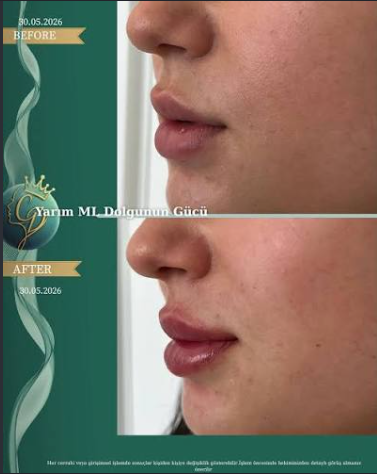
How is lip filler done is one of the questions I am asked most often before a first appointment. Patients usually want to know three things: what happens during the session, how much product goes in, and how long the result will last.
In this article I answer each of those using three current sources: a 2026 systematic review covering 3,692 patients, a multicentre study comparing needle and cannula under ultrasound, and a prospective study that mapped the lip arteries with ultrasound before injecting. What happens when the procedure goes wrong I covered in a separate article; here the focus is how it is done properly.
How is lip filler done? What happens during the session
The material used for lip augmentation is, in most cases, hyaluronic acid — a substance found naturally in the body that can be dissolved with the enzyme hyaluronidase if needed. How that product is placed in the lip, however, is not one single method. The 2026 systematic review describes three basic patterns:
- Linear retrograde (threading) technique: the needle or cannula enters the tissue and product is laid down as a fine thread while it is withdrawn. This was used in 12 of the 16 included studies (75%) — it is the real-world standard.
- Fan pattern: several directions are covered from a single entry point, which reduces the number of punctures and the chance of bruising.
- Microdeposit (microbolus) technique: very small amounts are placed at specific points to refine contour, projection and texture.
In practice these are usually combined within the same session: linear retrograde for body volume, microdeposits for contour refinement. Which one is used where depends on which subunit of the lip is being treated.
Needle or cannula — which is better?
This is the second question I hear most in consultation, and the honest answer is plainer than people expect.
In the systematic review, of the 14 clinical studies that stated their instrument, 9 (64.3%) used a needle only and 5 (35.7%) used needle plus cannula. No study used a cannula alone. No consistent difference in adverse event patterns was found between the two approaches; as the review puts it, instrument choice alone does not appear to determine safety or satisfaction — technique and injector expertise are more relevant.
Where the instrument does make a difference is the shape of the result. In a study of 27 patients scanned with ultrasound across five centres in Colombia, Spain and Mexico, deposit shape separated clearly by instrument:
- Of the 12 patients whose filler formed elongated, thin, linear deposits, 11 had been treated with a cannula.
- Of the 17 patients with rounded deposits, 15 had been treated with a needle.
What that means for you: a cannula tends to give broader, more continuous volume, while a needle tends to give more focal, projection-led fullness. Neither is superior; the choice follows the look you are aiming for. In that same study 100% of patients reported being satisfied regardless of which instrument was used, and 74% gave the highest satisfaction rating. The authors note that larger studies with statistical analysis are needed to confirm the pattern.
How many ml of lip filler is right?
All 14 clinical studies in the review reported the volume used. The mean was about 1.57 mL per session, with a range of 0.6 mL to 3.0 mL. Most studies used 1–2 mL per session, corresponding to moderate augmentation. Volumes up to 3 mL appeared where both lips were fully treated or several techniques were combined.
The real point here is not the number: 1 ml is a unit of measurement, not a treatment plan. The same 1 mL produces an obvious change in a thin lip and a barely noticeable one in a full lip. In our clinic the volume follows the anatomy found at examination and the result you want — not a figure you arrived with.
How long does lip filler last?
Here we have clear measured data. In a prospective study following 25 women for six months with ultrasound and 3D imaging, the volume gained behaved like this:
- At 1 month: an average volume increase of 0.96 mL
- At 3 months: 0.86 mL
- At 6 months: 0.58 mL
So about 60% of the volume present at one month was still there at six months. In the same study, upper lip thickness rose from an average of 8.94 mm to 10.98 mm at one month, then gradually regressed.
This is the single most important expectation I set with patients: filler does not vanish overnight, but the way your lips look at one month is not how they will stay. Treating that first-month fullness as the baseline, and topping up to maintain it, is the most common route to an overfilled lip.
How close is the needle to an artery?
The serious risk in lip filler is product entering a blood vessel. So where the artery actually sits is not a point of theory — it is a practical safety question.
In ultrasound measurements on 25 patients, the depth of the upper lip artery relative to the vermilion border averaged 2.54 mm at the midline, increasing to 6.62 mm towards the corner of the mouth. In the lower lip the midline figure was 1.91 mm. In other words the artery is most superficial in the very centre of the lip.
More striking is the spread around those averages: standard deviations ranged from ±1.2 to ±2.2 mm. The difference between individuals is as large as the average itself. That is precisely the authors' point — you cannot work from an average map.
The 27-patient ultrasound study supports this. The lip arteries were found in the wet submucosa in 81% of patients, in the superficial dry submucosa in 15%, and within the muscle in 4%. In one patient the upper lip artery ran unexpectedly through the muscular plane. There is no such thing as "standard anatomy."
What do the first two weeks look like?
All 14 clinical studies in the review reported safety data. The adverse events described were predominantly mild and transient: oedema (swelling), ecchymosis (bruising) or haematoma, pain at the injection site, and temporary firmness or nodularity.
There are concrete figures on duration too:
- Most reactions resolved within 14 days.
- In one randomised trial, injection-site reactions lasted 15–30 days in roughly a quarter of patients; the most commonly reported were lumps, bumps and firmness.
- In another randomised trial, severe lip swelling was reported in 2% of patients.
No vascular occlusion or vision-threatening events were reported in the clinical series included in the review. But the review's own caveat has to be carried over intact: absence of reporting should not be interpreted as absence of occurrence. Follow-up periods and reporting standards varied, and rare events may simply not appear in this picture.
Are patients actually happy with the result?
Satisfaction rates are high — but they change over time, and knowing that curve is the best way to set expectations properly.
Across the studies in the review, satisfaction was generally reported as above 80–90% rated "improved" or "much improved". In one longer-follow-up trial the trajectory was: 99.1% pleased with the result at week 6, 96% at 6 months, and 69.1% at 18 months. In the ultrasound study, 88% of patients remained satisfied at 6 months.
That decline is not a failure. It is the natural consequence of the product being absorbed. Lip filler is a maintenance treatment, not a one-off procedure.
Is there a single best lip filler technique?
No — and that is the clearest conclusion of the 3,692-patient review. In the author's words, current evidence does not support a single superior technique, instrument or product.
The reason is methodological. The randomised trials carry "some concerns" over randomisation and blinding, the observational studies show moderate to serious risk of bias from confounding, and there is no adequately powered study designed to compare techniques head to head.
So a clinic telling you "we use technique X because it is scientifically the best" is claiming more than the evidence supports. What the evidence does say is this: technique is chosen to fit the anatomy, and the main determinant of the outcome is the experience of the person injecting.
What lip filler cannot fix
This section is not from the source papers; it is a summary of my clinical practice. Setting expectations correctly is half the result:
- Vertical lines above the lip (barcode lines) are not a filler job on their own. Filler can soften the muscle action somewhat, but sun damage and smoking are skin quality problems that need addressing separately.
- Proportion problems arising from teeth and jaw structure. A problem coming from the supporting framework is not solved by putting product in the lip.
- Someone else's lips. The result in the photograph came from that person's lip thickness, muscle structure and tissue support.
- Adding volume while previous filler is still in place. In the ultrasound study, an old deposit that had produced an unsatisfactory result was dissolved under ultrasound guidance before new treatment. That is the correct order.
Sometimes the right answer is "let's not inject at this appointment." Saying that is part of the job.
Frequently asked questions
How is lip filler done, and does it hurt? The product is placed in the lip tissue with a needle or a cannula, and the procedure typically takes a few minutes. Most hyaluronic acid products contain lidocaine, and a topical anaesthetic cream can be applied beforehand. Discomfort is usually described as mild, but it varies between individuals.
How many ml of lip filler should I have? Studies report a mean of about 1.57 mL per session, most often 1–2 mL. But the right amount depends on your lip structure and your goal; quoting a figure without an examination would not be honest.
How long does lip filler last? In a study with six months of follow-up, roughly 60% of the volume increase present at one month was still there at six months. Longevity varies with the product used, the amount placed and individual metabolism.
Is a needle or a cannula safer? The systematic review found no consistent difference in adverse events between the two. A cannula tends to create more elongated deposits and a needle more rounded ones; the choice is driven less by safety than by the look being aimed for.
How long does swelling last after lip filler? In the studies, most reactions resolved within 14 days; in one randomised trial they lasted 15–30 days in about a quarter of patients. See your doctor if marked swelling or firmness persists beyond two weeks.
What if I don't like the result? Hyaluronic acid fillers can be dissolved with hyaluronidase. This is the most important difference between lip filler and permanent procedures — it means your decision is reversible.
Appointments and information
Which technique, which instrument and which volume suit you — and whether lip filler is the right step for you at all right now — can only be determined by examining your lips. At the Dr. Canan Demir clinic, every patient's lip anatomy, previous treatment history and desired result are assessed together, and technique and volume are planned only after that assessment.
For an individual assessment or an appointment, contact the Dr. Canan Demir clinic. We are glad to answer your questions.
This content is for information only and does not replace medical advice. Treatment decisions are made after a clinical examination.
Sources: Miranda Cerna VR. Hyaluronic Acid Injection Techniques for Lip Augmentation — Comparison of Linear, Retrograde, and Microdeposit Approaches: A Systematic Review. Aesthetic Surgery Journal Open Forum. 2026;8:ojag059. DOI: 10.1093/asjof/ojag059 — Gonzalez C, Callejas E, Nuñez C, et al. Lip Volumization With Hyaluronic Acid: Comparative Ultrasonographic Evaluation of Cannula and Needle Techniques in a Multicenter Study. Cureus. 2025;17(2):e79325. DOI: 10.7759/cureus.79325 — Kim JS. Enhancing Lip Augmentation Safety and Aesthetics Through 11-Point Injection Technique and Sonographic Vascular Mapping. Plastic and Reconstructive Surgery – Global Open. 2026;14(4):e7520. DOI: 10.1097/GOX.0000000000007520