Journal · Clinic Approach
Why Lip Filler Goes Wrong: What Ultrasound Reveals
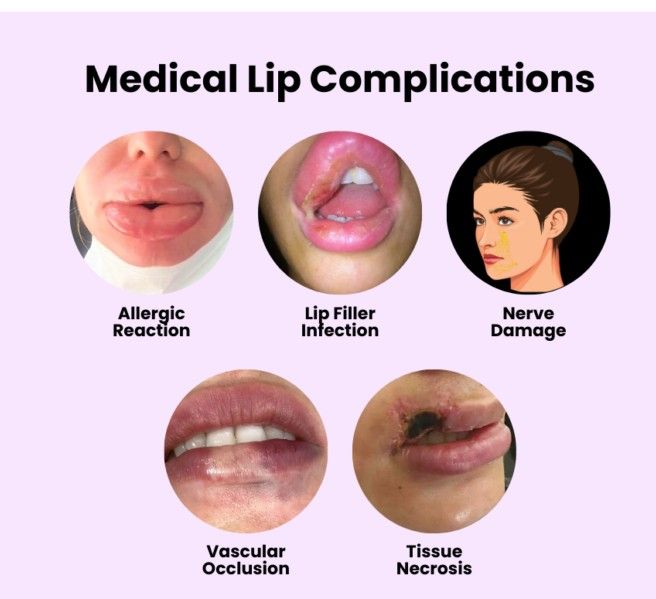
Lip augmentation is one of the most frequently performed aesthetic procedures in the world. ISAPS figures quoted in one of the papers behind this article record more than 4.3 million hyaluronic acid filler procedures worldwide in 2022. But the complaint I hear most often in consultation is no longer "my lips aren't full enough." It is "my lips look wrong."
Product sitting above the lip border, a heavy upper lip that reads as a duck pout, firm lumps appearing months later — what these usually have in common is not the brand of filler. It is where the filler actually ended up. In this article I go through the findings of an ultrasound-based study published in Plastic and Reconstructive Surgery in 2026 and a systematic review of lip filler adverse reactions, in the same language I use with patients in the treatment room.
Ultrasound showed where the needle really goes
In a cross-sectional study run at clinics in London and Amsterdam, the lips of 126 people were measured layer by layer using high-frequency ultrasound (18–20 MHz). Fifty-two participants had previously had hyaluronic acid lip filler; 74 had never been treated. Mean age was 34.6 years; 109 participants were women and 17 were men.
The most striking finding is this: the superficial layer that injectors aim for is not thick enough to hold the product. The subcutaneous layer measured on average 1.47 mm in the upper lip and 1.65 mm in the lower lip. Total lip thickness averaged 8.36 mm in the upper lip and 9.01 mm in the lower lip.
As a result, regardless of the technique used, filler was visualised inside the orbicularis oris muscle in most treated participants — particularly in the pars marginalis. In other words, even when the injector targets a superficial plane, the product lands in muscle. The authors attribute this not to the product or the device but to technique and anatomical awareness.
Migration is not bad luck: the difference between techniques was measured
The same study assessed spread of filler beyond the intended injection site. The results are unambiguous:
- Spread was found in 52% of previously treated patients (27 of 52).
- With vertical vector techniques — classified in the study as tenting and the "Russian lip" — the rate was 73% (22 of 30).
- With the horizontal vector technique, it was 24% (5 of 21).
- The difference was statistically significant (odds ratio 8.8; p = 0.0007).
Beyond that, every single vertical-technique case crossed more than one anatomical layer. With the horizontal technique the product stayed confined to the subcutaneous layer in 20% of cases and involved both the subcutaneous and pars marginalis layers in 80%; none extended beyond two layers.
We now have imaging data to support what many injectors suspected about the vertical "Russian lip" approach popularised on social media: it is associated with measurably more spread. That does not mean the technique will cause a problem in every patient. It does mean the risk is not equal.
Increased vascularity that persists for months
Doppler ultrasound was used to look for hypervascularity in treated lips. The authors argue that hypervascularity still present months after injection cannot be explained by the transient vasodilation of local anaesthetic; it is more consistent with trauma- or filler-related inflammatory processes and with vascular remodelling from repeated injection or overfilling.
The clinical translation is simple: the more often and the more heavily a lip is filled, the more the tissue starts to behave differently.
Late complications: months, sometimes years later
The second source is a systematic review published in Frontiers in Oral Health in 2024. It examined 19 observational studies (4 case series, 15 case reports) reporting adverse drug reactions after lip filler, covering 30 patients in total. Twenty-nine were women and one was a man; mean age was 50.9 years.
- The most commonly reported reaction was granulomatous foreign body reaction: 23 of 30 cases (76.6%).
- Mean time from injection to granuloma onset was 57.9 months (median 24 months).
- In patients treated with hyaluronic acid specifically, this was a mean of 41.4 months (median 24 months, range 1–144 months).
- Angioedema occurred in two cases and developed within minutes of injection. It is rare, but it is the most dangerous of these reactions because it can obstruct the upper airway.
- None of the included studies reported the adverse reaction to a regulatory authority.
One point deserves emphasis: these 30 cases are compiled from case reports and are not a measure of frequency. Rare and severe events are far more likely to be published. The incidence of granulomatous reaction after hyaluronic acid filler reported in the literature and quoted by the review is 0.02% to 0.4%. So most of these pictures are rare — but "rare" and "will not happen" are not the same thing.
The review's practical recommendation is clear: follow-up after filler should continue for at least two years, because a reaction can appear months or even years after the procedure.
No two sets of lips are the same
Another finding of the ultrasound study is that lip anatomy varies measurably between individuals:
- The lower lip is thicker than the upper lip across nearly every layer. The largest difference is in the wet mucosa. This supports the 1:1.6 upper-to-lower ratio used in aesthetic planning.
- Age was inversely correlated with total lip thickness and lip fullness; tissue thins as we get older.
- Higher body mass index was associated with thicker subcutaneous, connective tissue and wet mucosal layers.
- Sex and race and ethnicity were associated with significant differences in some layers. The authors stress that numbers in some ethnicity subgroups were small, so those findings should be treated as exploratory, not definitive.
What this means in practice: there is no such thing as a "standard 1 ml lip." The same volume of product produces two different results in two different lips.
The order of botulinum toxin and filler may matter
Participants who had received lower face botulinum toxin within the previous six months showed thinner connective tissue and subcutaneous layers in the lower lip. This is a cross-sectional observation, not a demonstrated cause-and-effect relationship, and the authors say it warrants further investigation. It is still worth thinking about when lower face toxin and lip filler are planned in the same period.
Is ultrasound required for every treatment?
No — and the source study says so explicitly. The authors accept that routine ultrasound for every lip filler procedure may not be feasible. Where it is genuinely valuable is in complex cases, revision treatments and complication management. Portable high-frequency devices and structured training are making it steadily more accessible.
What lip filler cannot fix
This section is not from the source papers; it is a summary of my clinical practice. Setting expectations correctly is half the result:
- Vertical lines above the lip caused by sun damage and smoking. These are a skin quality problem, not a volume problem, and filler alone does not correct them.
- Marked skin laxity. Where there is significant laxity around the mouth, adding filler weight makes the appearance heavier, not fresher.
- Proportion problems arising from teeth and jaw structure. A problem coming from the supporting framework is not solved by putting product in the lip.
- Adding product on top of filler that has already migrated. Here the right approach is usually to dissolve with hyaluronidase first, allow the tissue to settle, and only then plan again.
Sometimes the correct answer is "do not have lip filler right now." Saying that is part of the job.
How we work in the clinic
Here is what the data above means in my practice: lip structure and previous treatments are assessed individually in every patient; planning favours horizontal vectors and conservative volumes; adequate time is left between sessions; imaging is used where there is migration, firmness or an unclear treatment history; and where appropriate, dissolving comes before adding anything.
Frequently asked questions
How do I know whether my lip filler has migrated? Product extending past the vermilion border, a ridge developing above the upper lip, and an irregular contour on smiling are the typical signs. A definitive assessment requires examination, and imaging where necessary.
Will migrated filler resolve on its own? Hyaluronic acid is absorbed over time, but the source study visualised filler deposits and persistent tissue changes on ultrasound in people treated well before the scan. If there is visible migration, I recommend assessment rather than waiting; dissolving with hyaluronidase is one option.
Is the "Russian lip" technique banned? No. But in the 2026 study, vertical vector techniques were associated with a significantly higher rate of spread than the horizontal technique. Technique should be chosen according to the patient's anatomy and expectations.
Can swelling appear years after filler? In the systematic review, the median time to onset of a granulomatous reaction was 24 months, and among hyaluronic acid cases the longest reported interval was 144 months. If you develop late swelling or firmness, see a doctor and tell them your full filler history.
How often should it be repeated? There is no fixed schedule. The ultrasound data indicate that frequently repeated, high-volume treatment is associated with tissue change and increased vascularity, so in our clinic intervals are kept generous and the decision is made at examination.
Appointments and information
Whether lip filler is right for you — and whether a previous treatment needs correcting — can only be determined by examining your lips. At the Dr. Canan Demir clinic, every patient's current anatomy and previous treatment history are assessed, and technique and volume are planned together with you.
For an individual assessment, correction of migrated filler, or an appointment, contact the Dr. Canan Demir clinic. We are glad to answer your questions.
This content is for information only and does not replace medical advice. Treatment decisions are made after a clinical examination.
Sources: Harris S, Schelke L, Orlovska M, Wortsman X, Cotofana S, Velthuis P. Ultrasound Evaluation of Lip Anatomy and Filler Placement: A Cross-Sectional Study of Injection Accuracy, Migration, and Demographic Variation. Plastic and Reconstructive Surgery. 2026;158(1):65e-75e. DOI: 10.1097/PRS.0000000000012772 — Coppini M, Caponio VCA, Mauceri R, Pizzo G, Mauceri N, Lo Muzio L, Campisi G. Aesthetic lip filler augmentation is not free of adverse reactions: lack of evidence-based practice from a systematic review. Frontiers in Oral Health. 2024;5:1495012. DOI: 10.3389/froh.2024.1495012